Rasmussen College Celebrates Diverse Families During 2017 Week of the Young Child [VIDEO]
It is often said, “The early childhood years are a critical period in human development.” It is during these years that a child’s brain is extremely flexible to taking in and learning new information. It’s also often during this time children are especially influenced by those around them, especially by their parents, friends and early childcare providers. Since 1971, the国家幼儿教育协会(Naeyc) has sponsored Week of the Young Child (WOYC). The week, celebrated April 24 through April 28 this year, recognizes the critical nature of the early childhood years, birth through age eight, as well as the needs of our country’s young children, their families and those who teach them.
Rasmussen College recognizes even the littlest of learners are valuable. Every year, to honor WOYC, Rasmussen College chooses a theme, hosts events on campus and in the community, leads a webinar and chooses a children’s book to feature.
Today, classrooms are becoming as diverse as the world around us. Diverse with not only students of different races, genders and religions, but also different ideas, beliefs and dreams. Early childhood educators have a responsibility to teach and talk about diversity from all angles. From the prevalence and importance of this topic, Rasmussen College derived this year’s WOYC theme,庆祝我们最年轻的学习者:尊重各种家庭, and its featured book,A Chair For My Mother由Vera Williams。这本书呈现出罗莎,她的母亲和她的祖母的故事,他们都失去了他们的家和财产。一起,他们省钱买一个舒适的椅子一起享受。
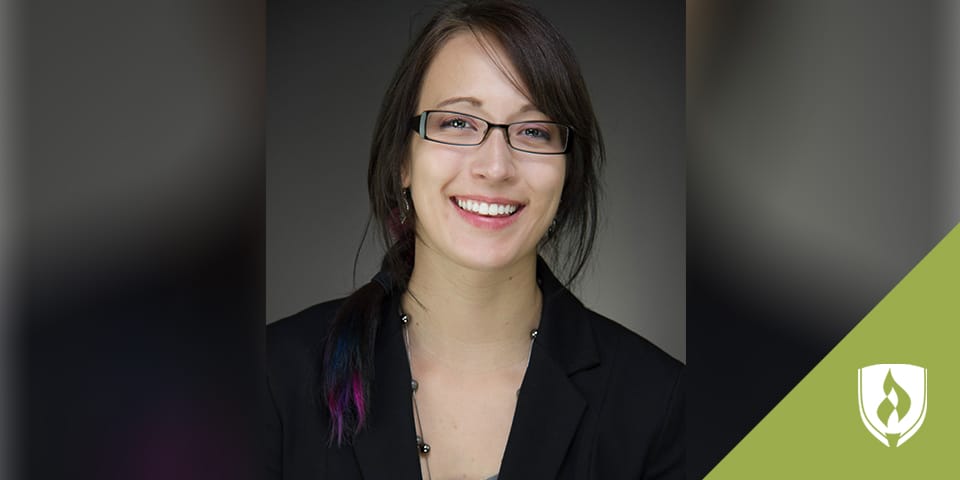
 This year’s theme and featured book sparked Rasmussen College Early Childhood Education (ECE) department chair Mary Muhs’ interest in the topic of diversity in the classroom and anti-bias education. When originally looking for a book to select this year, Muhs came across many excellent options that talk about different types of families. It made her wonder whether these books are actively used in classroom curriculum or are just sitting on bookshelves. She contemplated whether teachers were unsure of some of the topics these books bring up, such as same-sex couples, adoptions and single-parent households. While many teachers know the importance of addressing these topics and other forms of diversity in the classroom, perhaps it is fear of the potential questions from students that make teachers uneasy.
Muhs decided it would be important to talk about these questions and topics in an upcoming webinar for WOYC, “Anti-bias Education—Celebrating ALL Families in Our Care.” Muhs’ belief that all children should feel valued and included every day is the cornerstone for the webinar. “It is crucial for ECE providers to be willing to venture out of their comfort zones in order to make a difference and support their students from all diverse backgrounds,” said Muhs.
网络研讨会将从理论和实践方法中潜入反偏见的教育。将提出问题和开始对话将是一个论坛。网络研讨会还将为ECE专业人士提供外卖,以纳入课堂。
Now is the opportune time to help parents and ECE professionals think about what is being reflected onto children and help to educate them on the diverse world around them.
Children often think the world is comprised of what they see immediately in front of them. From a young age, it is important that children are made aware that the world is bigger than just their little house, their classroom and their community. Being exposed to and talking about diversity from a young age is crucial in today’s global society. According to Muhs, the goal of anti-biased education is to “help children see who there are in this wide world, build self-confidence, validate their experiences and make their differences a positive.”
“Differences are what make you special and unique, they are not something that needs to be feared,” says Muhs. Oftentimes it is fear of the unknown that creates conflicts. Muhs says, “It is important children recognize unfairness and know how to stand up to it. These things are learned with practice so it is important to start that practice young with developmentally appropriate exercises and lessons.”
Rasmussen College早期儿童教育学院,员工和学生对我国最年轻的学习者非常热衷。Muhs表示,她对ECE和反偏见教育的热情,一般来说,来自儿童的纯真。她说,“幼儿没有看到差异;常见是对他们重要的。事实上,如果我们能像孩子一样思考一点,我们都可能会变得更好。“
Muhs says, as an ECE provider, you are preparing children for decisions they will be forced to make later on. It is crucial that they are given the tools and background information they need early on so they can thrive as they grow and encounter new people in this wide world.
“As an ECE provider, teacher or parent, it is important to learn about our own biases and work to support a global view for our children,” says Muhs.
有关您最近的Rasmussen学院校园的更多信息,以庆祝幼儿周,参观Rasmussen College Woyc Guide。
To register for the Rasmussen College free WOYC webinar, “Anti-Bias Education—Celebrating ALL Families in Our Care” taking place on Thursday, April 27, 2017, from 7:00 p.m.–9:00 p.m. CST clickhere。
Rasmussen College is not a partner of NAEYC and our programs are not sponsored or endorsed by NAEYC.