Radiologic Technologist vs. Radiologist: Shedding Light on the Differences

If you’re looking to trade in your dead-end job for a more substantial career, it’s easy to understand the appeal of the growing healthcare field. There’s an entire generation of Baby Boomers hitting the peak of their healthcare needs and healthcare providers will need help保持需求为他们的服务。最重要的是,医疗保健职业也可以在薪酬和工作满意度中获得奖励。
So where should you start? Radiology is an appealing field for many—but when it comes down to choosing a radiology career path, there are questions that still need answering: What’s the difference between radiologic technologists and radiologists? How can you know which career path is best for you?
Daily job duties, average earnings and the level of education required are all important factors to consider. We sorted through all the information you’ll need in this overview of a career as a radiologic technologist versus a radiologist.
Radiologic technologist vs. radiologist: Job duties
Though both radiologic technologists (rad techs) and radiologists spend their days working with radiation technology to help patients, their specific job duties are quite different.
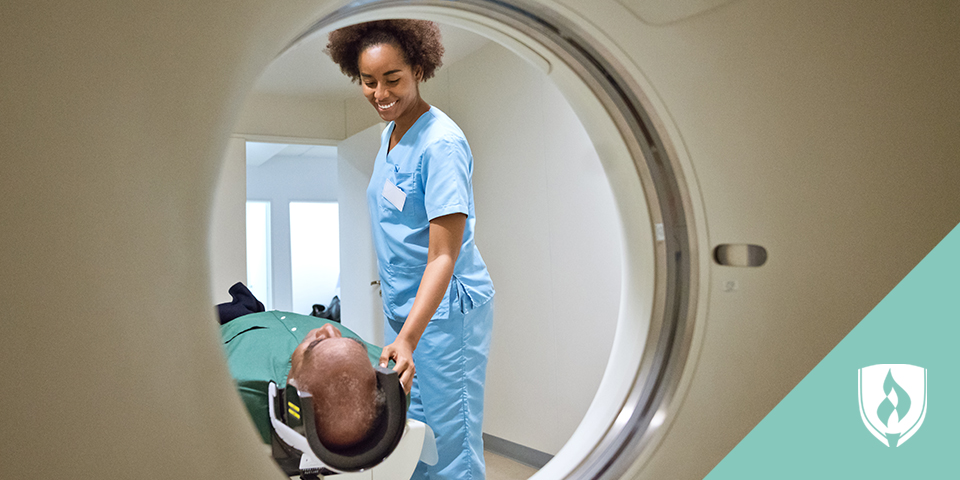
Rad techs are the healthcare specialists working directly with patients to capture imagery using radiation imaging equipment, according to the劳工统计局(BLS). They prepare patients for imaging procedures such as X-rays and MRIs, properly position the imaging equipment and take precautions to protect any body parts that do not need to be imaged. They also maintain imaging equipment and keep patient records.
放射科医生是选择专注于成像技术的医生。据Krysty Radabaugh,Operation /首席MRI技术总监Krysty Radabaugh的说法,他们的主要职责是基于Rad Techs拍摄的图像的医学诊断All-American Teleradiology, LLC。由于放射科学家的主要重点是诊断,因此它们没有与RAD技术人员一样多的直接患者互动。他们将向患者的订购医生传达任何调查结果,然后将接受案件。
Radiologic technologist vs. radiologist: Education requirements
放射科医生是放射学专业的许可医生,因此他们要求与M.D.标题一起进行的所有教育。这意味着四年的本科,其次是四年的医学院和居住计划,报告BLS。All said and done, it can take 8 to 12 years to become a radiologist.
“It’s a long process,” says Radabaugh. “Not many have or will take the time.”
The road to a career as a rad tech is a bit more accessible. You can get your start with as little as a two-year Associate’s degree and certification through theAmerican Registry of Radiologic Technologists。1
如果您决定推动您的职业生涯,它并不需要长时间成为RAD技术,并且有很多职业发展和持续教育的机会。许多RAD技术人员追求乳房X线摄影的放射学特色其他人决定通过返回学校成为放射科学家的进一步职业生涯。
虽然教育要求不同,但雷帕豪表示,两位职业都需要时间和努力以获得更好的患者结果。
Radiologic technologist vs. radiologist: Salary and job outlook
All the years radiologists spend in school pay off when they start earning their average salary of $206,920, according to theU.S. Department of Labor。2他们的工作前景也是积极的,其增长率较快,增长率为14%至2024。
But a radiologic technologist salary is nothing to scoff at. These healthcare professionals earn an average of $58,120 per year, with the highest 10 percent of earners bringing in more than $94,550,according to the BLS。2The job outlook for radiologic technologists is also quite sunny—the BLS projects an above-average 10 percent growth in employment by 2024, which is also faster than average.
放射学技术专家与放射科学学者:重要的品质
Both jobs are well suited for anyone with an interest in technology since imaging equipment is at the heart of the radiology field. However, some personalities may find they’re a better fit for one job over the other.
Radabaugh suggests that rad techs should be empathetic since they’ll be working directly with patients in what may be a scary or stressful medical situation. Many healthcare professionals want to see the difference they’re making up close and personal, which would make radiologic technologist a great option for you. You’ll be well suited for a rad tech job if you have a calming personality and enjoy working with both technology and people alike.
Radiologists need plenty of commitment to their job since they’ll need lots of schooling to enter the field and may need to work long hours once they land their dream job, says Radabaugh. This may be the job for you if you have a deep love of learning, enjoy the challenge of solving a problem through diagnostic imagery and don’t necessarily want to work one-on-one with patients.
Which career will you choose?
Now that you know all the details of a career as a radiologic technologist vs. a radiologist, you can make an informed decision about which career path is best for you. Your personality, salary expectations and the length of time you’re willing to spend in school are all factors to consider as you weigh your options in the radiology field.
如果您认为成为辐射技术专家,请为您提供对此问题的深入答案辐射技术专家们做了什么?
RELATED ARTICLES:
- 5放射学专业That Go Beyond X-Rays
- 11Entry-Level Healthcare Jobs Employers Want to Fill NOW
- 作为辐射技术专家的6个优点,您无法忽视
1Completion time is dependent on the number of courses completed each term.
2Salary data represents national, averaged earnings for the occupations listed and includes workers at all levels of education and experience. This data does not represent starting salaries and employment conditions in your area may vary.
Advertisement: This article was created by Rasmussen College to promote its radiologic technologist program. We do not offer programs that prepare students to become radiologists. Please see www.cho-design.com/degrees for a list of the programs we offer. Rasmussen College is a regionally accredited private college and Public Benefit Corporation.